
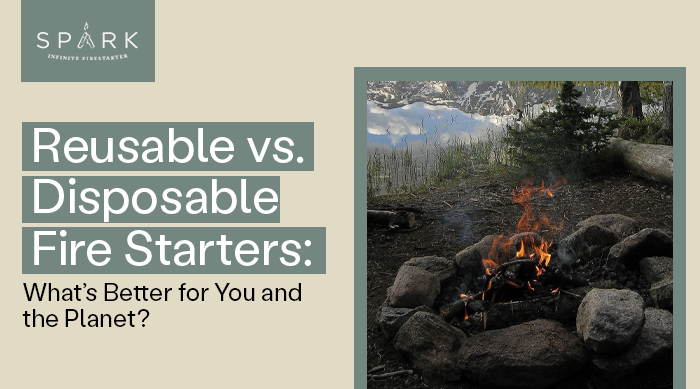
The fire starter you use affects cost, performance, and environmental footprint, whether you’re out there camping, grilling, or lighting a backyard fire pit. Here’s how reusable and disposable options compare to help you make the best choice.
Reusable fire starters, such as Spark, are gaining traction among eco-conscious users for their sustainability and long-term cost savings. This article highlights key reasons behind this shift.
What Are Reusable Fire Starters?
As the name suggests, reusable fire starters are designed to be used over and over again. They’re long-lasting, low-waste, and often more cost-effective over time than disposable options.
There are different types of reusable fire starters, each working in its own way. Common examples include:
-
Ferro rods (magnesium or ferrocerium fire starters)
-
Flint and steel
-
Electric plasma lighters
-
Char cloth setups
-
Alcohol-fueled reusable starters
Spark is the last kind. It uses about 10oz of rubbing alcohol, giving you a smokeless start to every fire.
What Are Disposable Fire Starters?
Disposable fire starters are intended for single-use. They’re generally cubes, logs, packets, or compressed materials that you light to start a fire.
Some disposable fire starters you’ve likely seen sold in stores include:
-
Wax-coated fire cubes
-
Paraffin or kerosene fire starter squares
-
Fire starter logs
-
Sawdust/wax tumbleweeds
-
Chemical fire starter packets
-
Pull-string fire starters
Disposable fire starters offer inexpensive, convenient single-use benefits, but they generate ongoing packaging waste and may contain chemicals that release potentially irritating fumes. These issues can be particularly problematic for individuals with respiratory conditions or those using starter devices in enclosed or poorly ventilated spaces.
The verdict? Reusable fire starters help avoid these problems. Alcohol-based options like Spark burn cleanly, evaporate without residue, and produce minimal smoke at start-up, making them a safer, more greener choice.
Thinking About the Environment & Your Fire-Starting Needs
Disposable fire starters generate waste, whether it’s from the packaging or the fumes from petroleum-based products. Spark, on the other hand, refills the device with rubbing alcohol and ignites your kindling cleanly.
Quick Comparison: Reusable (Spark) vs. Disposable Fire Starters
|
Feature |
Reusable Fire Starter (Spark) |
Disposable Fire Starter |
|
Waste |
Very Low |
High |
|
Cost over time |
Low |
High |
|
Ease of use |
Easy |
Easy |
|
Fuel needed |
Rubbing alcohol |
None |
|
Weather resistance |
Very good |
Varies |
|
Lifespan |
Years |
One-time |
There may be a slight learning curve with reusable fire starters, while disposables are usually straightforward. Spark, however, is simple: just add rubbing alcohol and ignite.
Reusable fire starters are also more weather-resistant in general (holding up to wind and moisture). And once purchased, your cost per fire drops significantly compared to buying disposables repeatedly.
There’s also safety to consider. Reusable fire starters avoid chemical fumes. Spark’s modern mechanism allows the alcohol to evaporate cleanly, whereas many disposables rely on petroleum-based accelerants that can produce excess smoke, soot, or fumes.
Disposable fire starters still serve a purpose if you only make fires occasionally. But for sustainability, cost, and convenience, a reusable fire starter is often the smarter and long-term choice.
FAQs About Disposable vs Reusable Fire Starters
Still got questions? Here are some common answers you’re looking for.
Are reusable fire starters really better for the environment?
Yes. They reduce waste and avoid petroleum-based accelerants, which produce fumes. Alcohol-fueled reusables, like Spark, burn cleanly, leave no residue, and cut down on long-term environmental impact.
What disposable fire starters are the least harmful?
The ones made from simple, natural ingredients, such as compressed sawdust-and-wax tumbleweeds, recycled paper starters, or untreated wood shavings. These burn cleaner and contain fewer chemical additives. Still, even “eco-friendly” disposables create one-time waste and packaging.
How long do reusable fire starters typically last?
An alcohol-fueled reusable starter like Spark can last indefinitely as long as the device is maintained and you refill the alcohol. Other examples include ferro rods, which can last for thousands of strikes, and electric plasma lighters that last through hundreds of charges.
Can reusable starters work in rain or extreme cold?
Most do, and they work better than disposables in bad weather. Alcohol-fueled starters like Spark can ignite in cold, damp conditions because the alcohol burns cleanly and steadily. Ferro rods and plasma lighters also work in wind or moisture.
Are petroleum-based disposable fire starters dangerous to burn?
Not generally when directions are followed, but they have other drawbacks. Many disposable fire starters contain kerosene, paraffin, or other petroleum distillates that produce more smoke and soot. They can also release chemical fumes when ignited and aren’t ideal for enclosed spaces.
What’s the best option for emergency preparedness?
A reusable fire starter is usually your best bet for an emergency kit because it works in a wide range of conditions. Alcohol-based fire starters, such as Spark, remain reliable even when wet, cold, or stored for extended periods.
Shop the Spark Firestarter today!