
Summary
- Start fires without matches using friction, sparks, solar heat, or electrical methods.
- Build a dry tinder nest first so the ember can grow into a steady flame.
- Airflow is a must, as tight or loose fire structures can stop flames from spreading.
- Add larger fuel slowly, especially with friction and solar fire methods.
- Prioritize safety because sparks, hot fibers, and low-visibility flames can scatter quickly.
Some of these methods are only for emergencies. Proper fire starters give you steadier flames, faster ignition, and better control.
Before Anything Else: Build a Proper Tinder Nest
Even the strongest spark fades without good tinder. A proper tinder nest helps a tiny ember grow into a steady flame. Prepare it before using any fire-starting method. Friction fires, sparks, and solar techniques all begin with small glowing embers.
Dry grass, bark shavings, cotton fibers, and dry leaves work best. These lightweight materials ignite quickly and help flames spread. Keep the nest loose and airy so oxygen can flow through it. Tight bundles trap heat and smother the ember.
1. Bow Drill Method (Friction Fire)
How It Works
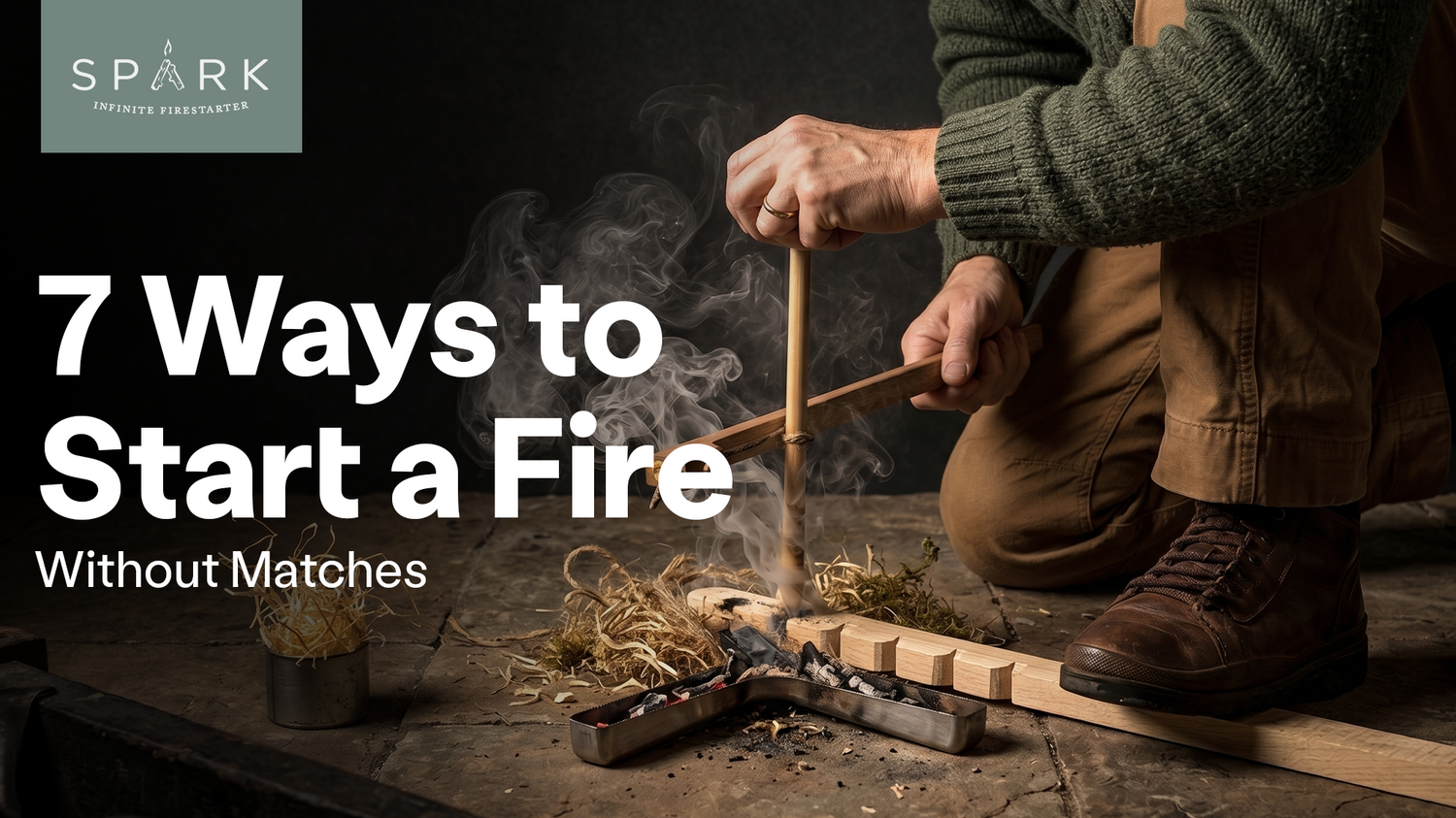
A bow drill starts a fire through friction. The bow spins a wooden spindle against a fireboard until hot wood dust collects and forms a small ember. That ember then transfers into your tinder nest.
Best Conditions
This method works best with dead, extremely dry wood. Medium-soft woods like cedar, willow, cottonwood, and poplar usually create embers more easily. Damp or green wood absorbs heat and slows ignition.
Challenges
Bow drills require steady movement and good control. A loose bowstring or poor hand position can make the spindle slip out while drilling. This method takes strength, patience, and practice. Wind, uneven ground, and rushed movements can stop the ember from forming.
2. Flint and Steel (Spark Method)
How It Works
Strike high-carbon steel against a sharp flint edge to create sparks. The rock shaves off tiny steel particles that heat up during impact. Those sparks then land on char cloth or fine tinder and begin forming an ember.
Why It’s Popular
The Flint and steel method is reliable for many outdoor conditions. The setup is small, reusable, and easy to carry in a backpack or pocket.
Important Reminder
Prepare your tinder bundle before striking any sparks. Flint and steel sparks burn fast and lose heat quickly. Char cloth, charred wood dust, or fine steel wool can help catch and hold the spark longer.
3. Magnifying Glass or Lens (Solar Fire)
How It Works
A magnifying glass focuses sunlight into a small, intense point of heat on the tinder. Hold the lens steady and adjust the angle until the light becomes a small, bright dot on the tinder. The focused heat slowly creates smoke and ignition.
Works Best When
This method works best in strong sunlight with little wind. Midday sun usually creates the hottest focused light. Dry tinder, like char cloth, grass, paper, or pine needles, catches much faster than damp material.
Common Items You Can Use
A standard magnifying glass gives the best results, but other curved lenses also work. Eyeglasses, binocular lenses, and reading glasses may help during emergencies.
4. Battery and Steel Wool (Electrical Fire)
How It Works
Touch a 9-volt battery to fine steel wool to create fire. The electrical current heats the thin metal fibers until they glow and ignite. Extra-fine 0000 steel wool usually catches fastest.
Why It’s Effective
This method creates ignition within seconds and requires very little skill. It also works well in cold weather, where friction fires become harder to manage. Keep your tinder close, since steel wool usually burns out within 5–10 seconds.
Critical Safety Warning
Steel wool ignites extremely fast and burns hot. Small burning fibers can spread onto dry material, skin, or clothing. Store batteries and steel wool separately. Direct contact can accidentally start a fire inside your backpack.
5. Fire Plow Method (Friction Fire)
How It Works
A fire plow creates friction by rubbing a wooden stick through a shallow groove in softer wood. The repeated motion creates hot, dark wood dust that slowly forms an ember. Fine dust and steady pressure help the coal build faster.
Key Difference from the Bow Drill
The fire plow uses a much simpler setup than a bow drill. You only need two pieces of wood and no cordage. The tradeoff is more physical effort. This method requires heavy pressure, steady rhythm, and repeated strokes.
Best Used When
This method helps when you cannot find cord, rope, or bow materials. It works best with very dry wood and firm ground that keeps the board stable.
6. Water-Filled Plastic Bag or Balloon (Solar Fire)
How It Works
A water-filled plastic bag or balloon can bend sunlight into a small hot point. Twist the bag carefully until the water forms a rounded shape like a lens. Then hold the bright light point over fine, dry tinder until smoke appears.
Emergency-Only Technique
This method works more slowly than a magnifying glass and needs patience. The bag can also burst if twisted too tightly.
Best Conditions
Strong sunlight and clear weather give better results. Dry tinder is extremely important because sunlight struggles to dry damp material.
7. Fire from Ice (Solar Fire)
How It Works
An ice lens starts a fire by focusing sunlight onto dry tinder. Shape a piece of clear ice into a smooth curved lens, then aim the brightest light point at the tinder.
Why It’s Difficult
This method requires very clear ice, strong sunlight, and careful shaping. Bubbles, cracks, or rough surfaces scatter light and weaken the heat. The lens may also melt during use and drip water onto the tinder.
Mostly a Survival Scenario
Fire from ice is more of a survival technique than a practical camping method. Making clear ice and shaping the lens takes time, practice, and steady sunlight.
Which Methods Are Most Reliable?
|
Method |
Reliability |
Difficulty |
|
Flint & Steel |
High |
Moderate |
|
Battery & Steel Wool |
High |
Easy |
|
Magnifying Lens |
Moderate |
Easy |
|
Bow Drill |
High |
Very Hard |
|
Fire Plow |
Low–Moderate |
Hard |
|
Water Lens |
Low |
Hard |
|
Ice Lens |
Very Low |
Very Hard |
Common Fire-Starting Mistakes
Wet Tinder
Wet tinder absorbs heat before ignition can happen. Damp grass, green wood, and soaked bark usually create smoke instead of flame. Use dry, lightweight material and keep it off cold or wet ground whenever possible.
Poor Airflow
Fire needs oxygen to grow. Tightly packed tinder and kindling can smother the ember. Large gaps between materials can stop the heat from spreading. Keep the structure loose enough for airflow but tight enough for the flames to spread between materials.
Rushing the Process
Adding large logs too early can smother a small fire before it builds enough heat. Constantly moving sticks and poking the flames can also break the airflow and scatter heat. Start with small tinder and kindling first. Add larger wood only after steady flames and hot coals appear.
Critical Fire Safety Warnings
Some Flames Can Be Hard to See
Some fuels, including alcohol and methanol, can burn with low-visibility flames. You may not clearly see the fire even while it is still burning. Never assume a flame is out just because the area looks clear. Carefully check for heat before touching or leaving the fire unattended.
Burning Materials Can Stick to Skin
Burning liquids, melted materials, and hot fibers can stick to skin or clothing. This can result in severe burn injuries. Keep flammable liquids away from your body and gear.
Emergency Methods Are Not Everyday Recommendations
These techniques work best as backup survival skills, not everyday fire-starting methods. Improvised fires can spread unpredictably and create more safety risks. Purpose-built fire starters give you more control, reliability, and safer ignition.
Tips for Better Fire-Starting Success
A few habits can make almost every fire-starting method more reliable:
- Prepare Materials Before Ignition: Gather and organize your tinder, kindling, and larger wood before creating a spark or ember. This keeps the fire growing without long gaps between fuel stages.
- Start Small: Build heat gradually with fine tinder and small sticks first. Large logs absorb heat and can smother weak flames before the fire stabilizes.
- Protect Your Ember: Shield the ember from strong winds while it grows. Use your body, gear, or nearby rocks to help block gusts until the flame gets steady.
Q&A Match
What Is the Easiest Way to Start a Fire Without Matches?
A 9-volt battery and fine steel wool usually create the fastest and easiest emergency fire with very little skill.
Can You Really Start a Fire With a Battery?
Yes, a battery can heat fine steel wool quickly enough to create sparks and ignition within seconds.
Does the Bow Drill Method Actually Work?
Yes, but it requires dry wood, good technique, and a lot of physical effort.
What’s the Safest Backup Fire-Starting Method?
The flint and steel method is one of the safest and most reliable backup methods because it creates controlled sparks without liquid fuel.
What Tinder Works Best in Survival Situations?
Dry grass, bark shavings, cotton fibers, char cloth, and fine wood dust usually catch embers the fastest.
Why won't my campfire catch even when I have plenty of wood?
Having plenty of wood doesn't guarantee a successful fire. Wet wood, poor airflow, incorrect fire structure, or skipping tinder and kindling can prevent flames from growing into a sustainable fire.
What type of wood is best for starting a campfire?
Dry, seasoned wood is best because it contains far less moisture than freshly cut or green wood. It ignites more easily, burns hotter, and produces less smoke.
How should I arrange wood to help a campfire burn properly?
Structures like the teepee or log cabin work well because they create space for airflow while keeping fuel close enough together for flames to spread efficiently.
The Bottom Line on Fire Starting
You can start a fire without matches using friction, sparks, solar heat, or electricity. Every method still depends on the same basics: dry tinder, steady airflow, and proper wood structure. Overlooking moisture, wind, or fuel setup can stop a fire before it grows.
These skills can help during emergencies or unexpected situations outdoors. Still, survival methods require patience, practice, and careful handling. Reliable fire starters and smart safety habits will always give you the best chance at a steady flame.