
Key Takeaways
- National Camping Week 2026 will take place from June 21 to June 27.
- Check fire bans, permits, and campground rules before you light any fire.
- Burn only dry, local firewood and avoid trash, treated wood, and plastic.
- Keep your campfire at least 15 feet from tents, shrubs, and other flammable objects.
- Never leave a campfire unattended, and keep water or a shovel within reach at all times.
- Skip gasoline and kerosene. Use dry tinder, kindling, or a safer fire starter instead.
- Before leaving, fully extinguish the fire using the drown, stir, drown again method.
Quick Reference
|
Mistake |
The Fix |
|
Burning the wrong wood or trash |
Burn only dry, locally sourced hardwood |
|
Placing the fire too close to the gear |
Keep the fire at least 15 feet from tents, trees, shrubs, and other flammable objects |
|
Ignoring burn bans |
Check fire restrictions before every trip. |
|
Leaving the fire unattended |
Keep an adult around the fire at all times |
|
Using gasoline or kerosene |
Use dry tinder, kindling, or a safer fire starter |
|
Building an oversized fire |
Start small and add wood gradually |
|
Not fully extinguishing the fire |
Drown, stir, drown again, and make sure the ashes are cold to the touch |
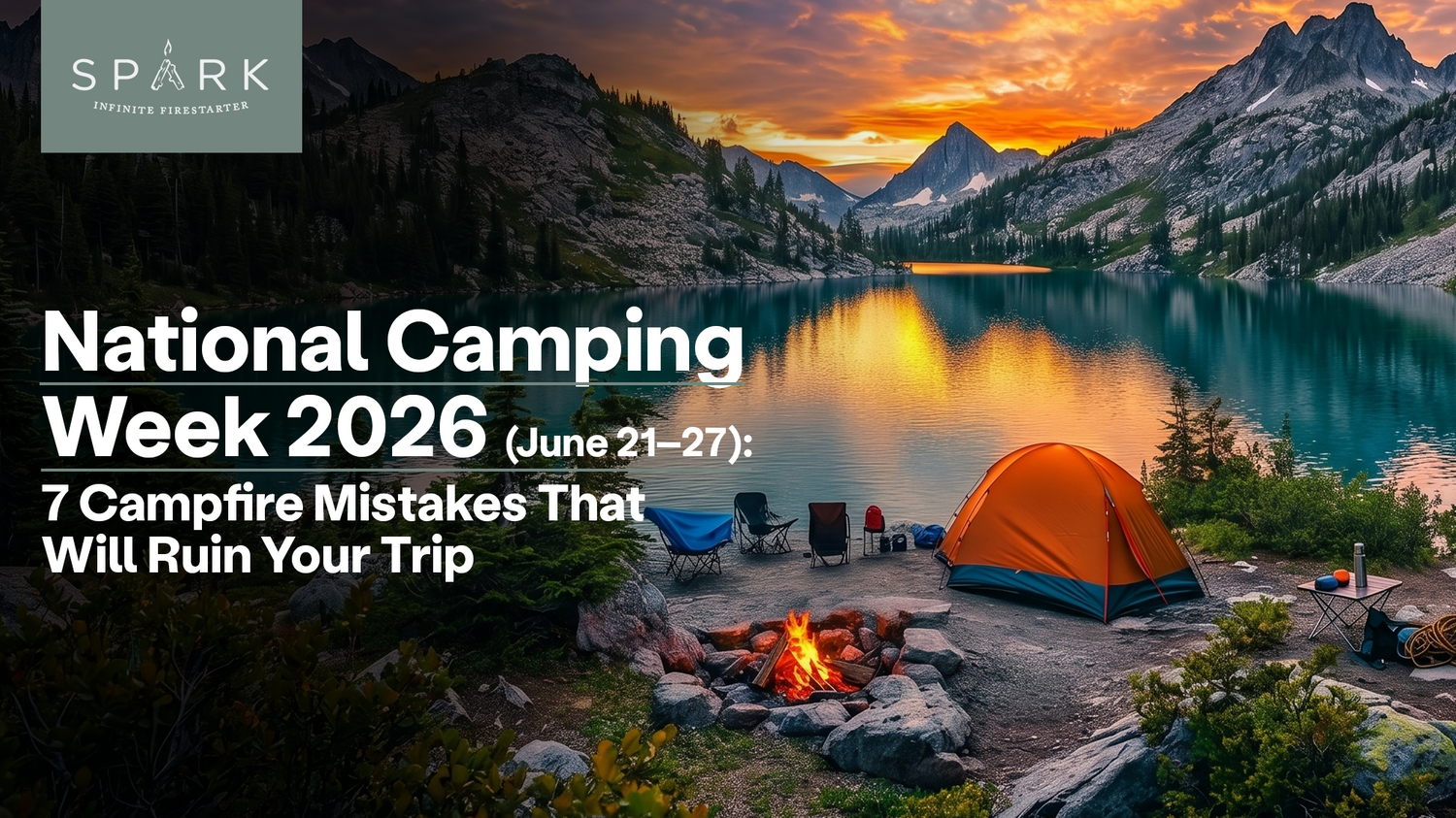
National Camping Week 2026 is this June 21 to June 27. For millions of people, it marks the first campfire of the summer. And let us tell you something: most campfire problems don't happen because of bad luck. People make the same mistakes again and again.

This guide covers seven common campfire mistakes and how to avoid them. Each mistake has a simple fix. Remember, you don't need special skills. You just need the right information before you light your fire.
Mistake 1: Burning the Wrong Wood (or Trash)
This mistake causes more trouble than most campers realize. The wrong fuel can produce excessive smoke, release harmful chemicals, and leave a mess for the next person who uses the fire ring.
Never Burn
Trash, food wrappers, plastic, foil, and other man-made materials don't belong in a campfire. Skip painted, stained, treated, glued, or engineered wood, too. These materials release toxic compounds when they burn.
|
Important: Avoid bringing firewood from home or across state or county lines. Invasive pests like the Emerald Ash Borer often hide inside firewood and spread to new areas when people transport it. Once established, these pests can kill trees and damage forests. |
Always Burn
Dry, locally sourced hardwood bought near your campsite is your best option. You can also gather dead and downed wood where local regulations allow. Well-seasoned wood burns hotter and cleaner. Aim for wood with a moisture content below 20%.
For tinder, stick with natural materials like dry bark, pine needles, paper, or dry leaves.
Mistake 2: Placing the Fire Too Close to the Gear
Wind changes quickly at a campsite. Even a small gust can carry a single ember farther than you expect. If it lands on a tent, an awning, or dry brush, it can start a fire in seconds.
The Rules
- Keep your fire at least 15 feet away from your tent, neighboring campsites, shrubs, trees, and other flammable objects.
- RV camper? Retract the awning before lighting a fire.
- Clear a 10-foot area around the fire site. Remove dry leaves, pine needles, loose grass, and other debris until you reach bare dirt.
- Never build a fire under trees, low-hanging branches, power lines, or other overhead obstacles.
A gust of wind is not a surprise at a campsite. Expect it. Leave enough space around your fire so you don't have to scramble when the wind picks up.
Mistake 3: Ignoring Local Burn Bans
Fire ban violations can lead to fines and liability for wildfire damage. In some areas, they can even result in criminal charges.
What You Need to Know
Fire bans can appear quickly during hot, dry weather. A campsite that allowed fires last weekend may prohibit them today. Don't assume campground rules tell the whole story. County, state, and federal fire restrictions can override local campground policies.
Where to Check
- Check Recreation.gov for national parks and federal lands.
- Visit your state's forestry or parks department website for state park restrictions.
- Ask the campground host or front desk when you arrive. Make it part of every trip.
- Check whether your destination requires a campfire permit, even when fires are allowed.
Mistake 4: Leaving the Fire Unattended
Did You Know? Unattended campfires are a major cause of wildfires each year.
What to Do
Keep an adult around the fire at all times. Assign a designated fire watch for the evening, especially when children are around. Before you light the fire, keep a bucket of water, sand, or a shovel within arm's reach.
Additionally, gather enough firewood before you start so nobody has to leave the campsite to restock. If everyone needs to leave, put the fire out first.
Mistake 5: Using Gasoline or Kerosene to Start the Fire
Every year, gasoline-related fires injure thousands of people. Gasoline, kerosene, and other accelerants release invisible vapors into the air. When those vapors come into contact with a spark or flame, the fire can flare up and spread within seconds.
What to Use Instead
Build your fire in the correct order: tinder first, then kindling, then firewood. You can also use fatwood sticks, crumpled newspaper, or cotton balls to get the fire started.
The reusable Spark Firestarter is a safer option. It uses rubbing alcohol instead of gasoline or kerosene. Rubbing alcohol burns at a controlled pace and doesn't create the same explosive vapor cloud that makes accelerants so dangerous.
Got family or pets? Check out our guide to learn what makes a fire starter safer to use around them.
Mistake 6: Building an Oversized Fire
Bigger is not better with a campfire. Large fires burn through wood quickly, create more sparks, and become much harder to control. They also take more time, water, and effort to extinguish safely.
What "Manageable" Looks Like
- Start with fuel logs no thicker than an adult's wrist.
- Keep flames below knee level in normal conditions.
- Build a fire small enough to safely reach and stir when needed.
Why People Overbuild: Usually, people get impatient and add large logs too soon. The fire looks small, so they keep adding more wood. The extra wood smothers the flames and slows the fire down.
The Fix: Build small, let the coal bed develop, then add fuel gradually. A low, steady fire is easier to control and often works better than a roaring one.
Mistake 7: Not Fully Extinguishing the Fire
Going to sleep with "no visible flames" is not the same as a fire that's out. Hot embers can hide beneath ash long after the flames disappear. A shift in wind can reignite them hours later.
The 3-Step Method
- Drown: Pour plenty of water over the fire until the hissing starts to fade. Soak all embers, ash, and partially burned wood.
- Stir: Use a shovel or long stick to turn the ash thoroughly. Break apart logs and expose hidden embers that water may have missed.
- Drown Again: Add more water and keep stirring. Repeat until the hissing stops completely and no heat remains.
The Test
Hover the back of your hand above the ashes. If you feel any heat at all, the fire is not out. The ashes should feel completely cool before you sleep or leave.
Before You Go: Scatter cold ash where permitted, replace any moved rocks, and pack out all trash and unburned materials.
Not sure how to put out a fire? Take a look at our guide to learn how to extinguish it properly.
National Camping Week Quick-Reference Checklist
Before You Leave Home
- Check fire restrictions on Recreation.gov or your state's forestry website.
- Confirm where you'll get local firewood.
- Pack a long-handled lighter, dry tinder, and a water bucket.
At Camp
- Confirm fire rules with the campground host when you arrive.
- Use a designated fire ring whenever possible.
- Clear a 10-foot area around the fire site.
- Set up your water bucket before lighting the fire.
- Assign a fire watch before starting.
Every Time You Leave or Sleep
- Fully extinguish the fire using the drown, stir, drown again method.
- Make sure the ashes feel completely cold.
- Remove all trash and unburned materials from the fire ring.
Want to feel more prepared on your next trip? Read our first-time camping guide and download the free camping checklist to pack smarter, camp safer, and avoid common beginner mistakes.
Q&A
When is National Camping Week 2026?
National Camping Week 2026 will run from June 21 to June 27. It takes place during the last full week of June and falls within National Camping Month, which is celebrated throughout the month.
What should you never burn in a campfire?
Trash, food packaging, treated or painted wood, plastic, or foil. These materials release toxic chemicals and leave harmful residue behind. Also, avoid transporting firewood from home. Invasive pests like the Emerald Ash Borer can hide inside firewood and damage local forests.
How far should a campfire be from a tent?
Keep your campfire at least 15 feet away from tents, dry shrubs, and other flammable objects. Clear all dry debris within a 10-foot radius before lighting. Wind can carry embers farther than most people expect, so give your fire plenty of space.
Is it illegal to have a campfire during a fire ban?
Yes. Fire bans carry legal force, and violations can result in fines and liability for wildfire damage. In some cases, authorities may also file criminal charges. Always check current restrictions before lighting a fire.
Can you use gasoline to start a campfire?
No. Gasoline and kerosene release invisible vapor clouds that can ignite quickly when they come into contact with a spark or flame. These flare-ups can cause serious burns and injuries. Use dry tinder, fatwood, or a safer fire starter instead.
How do you know when a campfire is fully out?
The ashes should feel completely cold, not just dark or free of visible flames. Drown the fire with water, stir the ashes thoroughly, and drown it again. If you feel any heat above the ashes, repeat the process.
Is it OK to leave a campfire to burn out on its own overnight?
No. Never leave a campfire to extinguish itself. Hot embers can remain active beneath the ash for hours and may reignite when conditions change. Always extinguish the fire completely before you leave or go to sleep.
Final Note for National Camping Week
National Camping Week is one of the best weeks of the year to get outside. The evenings are long, the weather is usually on your side, and a well-built fire at the end of the day is hard to beat.
None of the mistakes covered in this blog are difficult to avoid. Check the rules before you leave, give your fire enough space, and extinguish it properly at the end of the night.
Enjoy the week! Look after the site.