
Stop wrestling with stubborn wood and unreliable flames. Whether you’re deep in the woods, firing up the grill, or winding down by the fire pit, the right tool turns frustration into instant success.
The truth is anyone can master the perfect fire; you just need the right gear.
For you, we're pitting the old-school favorites against the modern solution. Let's dive into the comparisons, features, and tips that will change your fire game forever.
Full Comparison: Every Fire Starter Side by Side
| Category | Matches | Lighter Fluid | Gel Starter | Fire Cubes | Camping Starters | Spark Firestarter |
|---|---|---|---|---|---|---|
| Ease of use | Medium | Easy | Easy | Easy | Medium | Easy |
| Weather resistance | Low | Medium | Medium | Low | High | High |
| Safety | Medium | Low | Low | Medium | Medium | High |
| Environmental impact | Low | High | High | Medium | Low | Low |
| Cost over time | High | Medium | Medium | Medium | Medium | Low |
| Flame duration | Low | Medium | Medium | Medium | High | High |
| Reusable | No | No | No | No | Partially | Yes |
How Matches Work
Matches make fire starting feel simple and hands-on. You strike the wooden stick, hear that quick scratch, and watch the tip spark into a small, steady flame. The chemical-coated head only ignites on its designated striker, giving you control and reducing surprise flare-ups.
In dry, calm weather, matches work well for lighting candles, stoves, or small tinder piles. They are clean, biodegradable, and easy to manage.
But they have real limits. Wind snuffs them out fast, moisture ruins whole boxes, and each stick burns for only a moment. For anything beyond a candle or a kitchen stove, matches are an unreliable starting point.
How Lighter Fluid Works
Lighter fluid acts like a fast-forward button for fire starting. You squeeze it over charcoal or wood, hear the quick sizzle, and watch the flames jump almost instantly. Its volatile nature makes it ignite fast.
It’s inexpensive, easy to find, and removes the need for careful wood stacking or kindling. For many, it feels like the simplest way to jumpstart a grill or fire pit.
But those benefits come with trade-offs. The same chemicals that ignite quickly also release fumes that irritate your lungs and linger in the air. Lighter fluid adds to pollution through leftover plastic bottles and the chemicals it burns off.
When kids or pets are nearby, the bottle and sudden flare-ups increase safety risks. Add in the chance of over-pouring, and lighter fluid becomes far less user-friendly than it seems.
How Fire Starter Cubes Work
Fire starter cubes are compressed blocks of wax or paraffin that you place under your kindling or logs and light directly. They burn steadily for several minutes, which makes them a cleaner and more predictable alternative to lighter fluid for grills and fire pits.
Cubes are widely available, affordable, and produce less odor than fluid-based starters. Their main limitation is that they are single-use, create some residue, and are not particularly effective in wet or windy outdoor conditions without shelter for the flame.
How Gel and Liquid Fire Starters Work
Gel starters are squeezed directly onto wood or charcoal and light with a match or lighter. They burn longer than lighter fluid and are easier to control in terms of application. Some formulas are marketed as odor-free or low-fume, making them a step up from traditional lighter fluid for backyard use.
The trade-off is similar: they are still a consumable product, still require repeat purchases, and still carry risks if applied incorrectly or near an active flame. Gel starters are a solid middle-ground option but not a long-term solution.
How Camping-Specific Fire Starters Work
Camping fire starters include fatwood sticks, ferro rods, wax-coated wood shavings, and all-weather tinder. These are designed for the outdoors, where wind, moisture, and the absence of a store nearby all factor into the equation.
Fatwood and wax-coated options catch quickly and burn long enough to get dense logs going. Ferro rods require technique but work in virtually any condition and last thousands of strikes. These are the tools serious campers and overlanders rely on when convenience is not an option.
How the Spark Infinite Firestarter Works
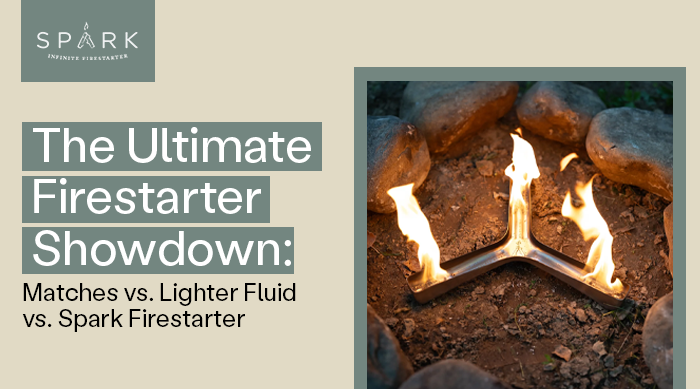
Spark Infinite Firestarter removes the stress from fire starting. You place it in your pit, pour in rubbing alcohol, and light it. The flame rises clean and steady, giving your logs the focused heat they need to catch quickly without smoke or fumes.
Its tri-wing design creates strong 360-degree airflow that helps the flame build fast. You get up to ten minutes of steady heat, giving even dense logs enough time to ignite without kindling or paper.
Spark Infinite Firestarter is made from a single piece of 16-gauge stainless steel, so it handles repeated burns with ease. It stays in your pit between fires and wipes clean in seconds, giving you reliable performance with minimal maintenance.
Best Fire Starter by Use Case
| Use Case | Best Option | Why |
|---|---|---|
| Camping and outdoors | Spark Firestarter or ferro rod | Weather resistance, durability, no consumables |
| Backyard fire pit | Spark Firestarter | Clean ignition, no fumes, stays in the pit |
| Emergency preparedness | Ferro rod or fatwood | Works without fuel, lasts thousands of uses |
| Indoor fireplace | Fire cubes or Spark Firestarter | Low smoke, controlled burn, no chemical odor |
| Grill | Spark Firestarter | Designed for smart ignition, easy to use |
| Quick and casual use | Spark Firestarter or fire cubes | Simple, affordable, no technique required |
Best Fire Starter for a Fire Pit Specifically
If you have a backyard fire pit, your priorities are different from a camper or a griller. You want a clean start, minimal smoke while the fire builds, no chemical smell drifting toward your guests, and something you do not have to restock every weekend.
Matches struggle with wind and take multiple attempts on larger wood. Lighter fluid gives you a fast start but at the cost of fumes and flare-up risk in a contained pit. Gel starters improve on fluid but are still a consumable with chemical burn-off. Fire cubes are cleaner but inconsistent on larger logs without supporting kindling.
A dedicated fire pit starter like Spark Firestarter is built for exactly this scenario. You place it in the center of your pit, add rubbing alcohol, and light it. The 360-degree airflow design pushes heat outward and upward, which is precisely what a fire pit needs to get logs catching evenly. The ten-minute burn window means you are not rushing to add wood before the starter dies out. And because it is stainless steel and stays in the pit, there is nothing to throw away and nothing to restock.
For fire pit use specifically, Spark is the most practical long-term solution available.
Why the Spark Firestarter Stands Out Across Every Setting
Camping and Outdoor Conditions
Wind kills weak flames. Dense wood resists catching. Weather shifts without warning. Spark cuts through all of it with 360-degree airflow that holds steady in wind, up to ten minutes of heat for dense logs, and a one-piece stainless steel body that handles travel, drops, and repeated outdoor burns.
Backyard Fire Pits
Slow starts, messy kindling, and thick smoke turn a relaxing evening into a chore. Spark delivers a powerful, low-smoke flame that gets logs burning fast without kindling, fits low-profile in the pit between uses, and wipes clean in seconds.
Eco-Friendly and Low-Waste Fire Starting
Spark replaces every single-use starter you would otherwise buy and throw away. It burns rubbing alcohol with minimal soot, eliminates plastic bottles and chemical gels, and its stainless steel construction means it is a one-time purchase with a long useful life.
Families Concerned About Safety
Spark delivers controlled ignition with no sudden flare-ups, uses simple rubbing alcohol instead of harsh chemical fluids, and gives you a steady and predictable flame window that removes the need to rush or handle the fire carelessly.
Tips for Safe and Effective Fire Starting
Stack wood with space between each layer to keep airflow strong and help the fire build evenly.
Apply any flammable liquid before lighting, never onto an active flame.
Avoid overcrowding the fire, using wet wood, or skipping essential fire-building steps.
Store all fuels tightly sealed, keep tools dry, and clear debris around your fire area before and after each burn.
Why Spark Is the Modern Upgrade
You have seen the trade-offs. The fleeting flash of a match. The fume-filled burst of lighter fluid. The single-use waste of cubes and gels. Every traditional option makes you pay in some way, whether in reliability, safety, cost, or convenience.
Spark cuts through every one of those compromises with reusable stainless steel, less smoke, less mess, and far more control. One purchase, no restocking, and a fire that starts right the first time.
Ready to upgrade? Grab Spark and enjoy the effortless fire you deserve.
Curious? Let’s Clear the Smoke
How long does the Spark Firestarter’s flame last?
About ten minutes of solid, focused heat. Way more useful than a quick flare-up.
Is rubbing alcohol safe to use for fire starting?
Yes. Add it before lighting and never pour it onto an active flame. That is the only rule that matters.
Can the Spark Firestarter be used in a smokeless fire pit?
Absolutely. It actually helps smokeless pits reach a clean burn faster by delivering focused heat from the start.
What is the best fire pit starter for backyard use?
Spark Firestarter is the top option for backyard fire pits. It produces no chemical fumes, stays in the pit between uses, and delivers a consistent ten-minute burn that gets logs catching without kindling.
Are matches reliable in wet or windy conditions?
Not really. Wind and moisture shut matches down fast. They are best suited for calm, dry indoor conditions.
Is lighter fluid dangerous to use around kids or pets?
Lighter fluid presents several risks like fumes, flare-ups, and the danger of over-pouring. This makes it unsuitable for family settings.
What is the difference between a gel fire starter and lighter fluid?
Gel starters are thicker, easier to control during application, and often produce less odor than traditional lighter fluid. Both are consumable and both carry risk if applied near an active flame, but gel is generally the safer of the two for backyard use.
How many uses can you get out of the Spark Firestarter?
Endless. It’s stainless steel and basically indestructible, so have fun!