
Key Takeaways
- No yard does not mean no real fire. The priorities simply change.
- Always check your lease, HOA rules, and local regulations before purchasing fire equipment.
- Smoke control and heat containment matter more when neighbors are nearby.
- Portable equipment is often the best choice for renters and small-space living.
- Compact, reusable gear helps solve the storage challenges many renters face.
- Reliable ignition reduces smoke, frustration, and repeated relighting.
- The best small-space fire setup is easy to use, easy to store, and easy to take with you when you move.
You do not need a large backyard to enjoy a real fire. Whether you have a compact patio, a small yard, or a rental property where permanent modifications are not allowed, there are practical ways to build a safe and enjoyable fire setup.
The key is choosing equipment that fits your space, follows local rules, and stores easily when the evening is over.

Why "No Yard" Doesn't Mean "No Fire"
A lot of fire pit advice assumes you have room for a permanent installation. It often focuses on large backyard layouts, built-in stone fire pits, and dedicated gathering spaces.
That advice does not help much if you live in an apartment, rent your home, or simply have limited outdoor space.
The good news is that a great fire experience is not defined by the size of your yard.
In smaller spaces, portability matters more than permanence. Containment matters more than flame size. Storage matters more than square footage.
A well-planned setup can provide the same warmth, atmosphere, and enjoyment as a much larger installation without requiring construction, landscaping, or permanent changes to the property.
The goal is not to build the biggest fire possible. The goal is to build a safe, controlled fire that works with the space you actually have.
Can You Even Have a Fire on a Balcony? (Well, That's a Legal Question)
Before comparing fire pits, start with the most important question: are they allowed where you live?
Many leases contain restrictions on open flames, charcoal-burning equipment, wood-burning devices, or outdoor heating appliances. Even if a fire pit is not specifically mentioned, broader fire-safety language may still apply.
HOAs and condominium associations can create additional rules. A setup that complies with your lease may still be prohibited by community guidelines.

Local fire codes and ordinances can also affect what is permitted. Requirements vary based on location, building type, and housing density.
In apartment and condo buildings, the default rules are strict. Many U.S. cities use the International Fire Code, which keeps wood-burning portable fire pits at least 15 feet from buildings and limits open flames on balconies, with exceptions for one- and two-family homes. Cities can change these rules, so check yours, but a wood fire on an apartment balcony is unlikely to be allowed.
It is also worth reviewing your renters insurance policy. Coverage differs from policy to policy, and understanding your responsibilities before using fire-related equipment is always a smart idea.
If fires are not permitted where you live, do not try to work around the rules. Instead, consider flameless alternatives such as outdoor LED lanterns, electric fireplaces, or ambient patio lighting.
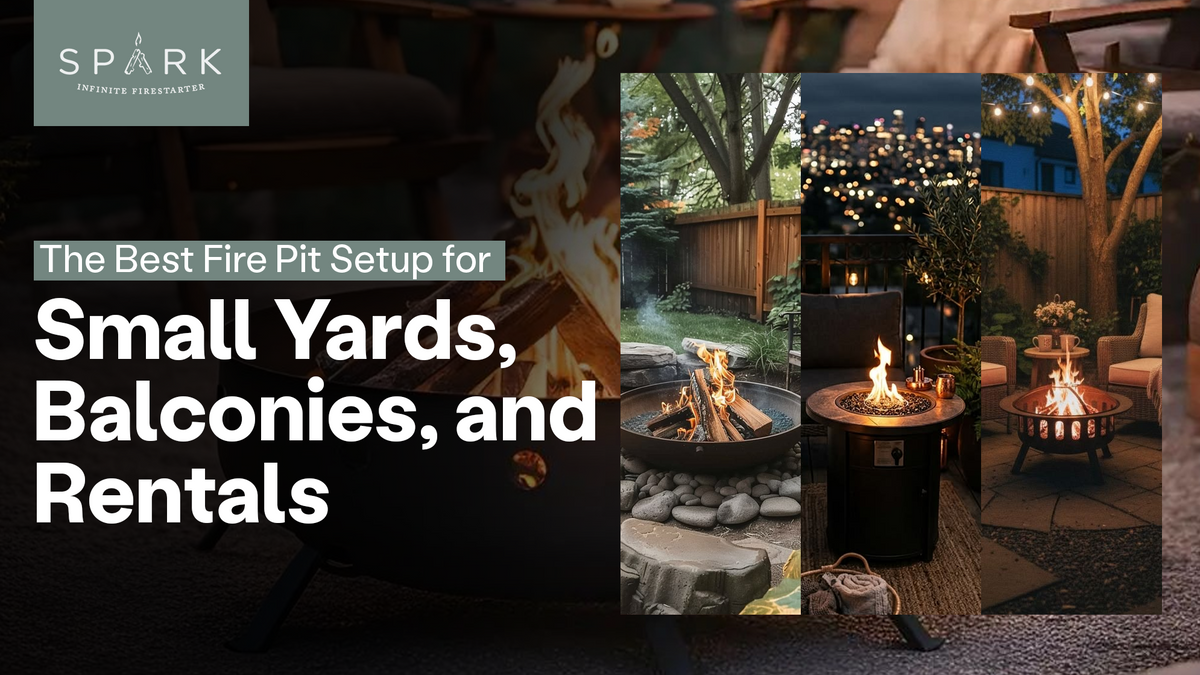
Before buying, check what's allowed and how much space the fire pit needs around and above it. The wood-burning setup below works for small yards and open patios, but it may not work for your balcony.
What to Look for in a Small-Space Fire Pit
When shopping for a fire pit designed for smaller outdoor areas, focus on the features that matter most.
Small Footprint
Choose a model that fits comfortably within your available space. A fire pit designed for large backyard gatherings may overwhelm a small patio, balcony, or courtyard.
Heat Protection
Look for a raised design or pair the fire pit with a heat-resistant barrier underneath. Some models need a separate stand as well as a heat-resistant barrier to protect the surface underneath.
Low Smoke Output
Smoke becomes much more noticeable when neighboring homes, balconies, or seating areas are close by. A cleaner-burning fire creates a better experience for everyone around it.
No Permanent Installation
Avoid anything that requires drilling, anchoring, concrete work, or structural modifications. Portable setups are easier to store, easier to move, and much more renter-friendly.
Setting Up Safely in a Tight Space
Smaller outdoor spaces leave less room for mistakes. Before lighting a fire, run through a quick safety checklist:
- Leave the space required in the fire pit's instructions between it and walls, railings, furniture, umbrellas, and overhangs.
- Check wind direction before lighting.
- Position the setup so smoke is less likely to drift toward neighboring units.
- Keep water nearby and easily accessible.
- Have a fire extinguisher within reach.
- Use only approved fuel sources and follow manufacturer instructions.
- Never leave a fire unattended.
- Allow all equipment to cool completely before moving or storing it.
A few minutes of preparation can prevent a lot of frustration later.

The Fire Starter Question: Why Ignition Matters More in Small Spaces
In a large backyard, a slow or messy fire start is mostly an inconvenience.
In a smaller space, it can quickly become everyone's problem.
Repeated relighting attempts create extra smoke. Smoldering paper and damp kindling can send smoke toward nearby windows, doors, and neighboring properties. What feels like a minor annoyance in a large yard can become a much bigger issue when people are only a few feet away.
That is why ignition matters.

A reusable fire starter simplifies the process while reducing clutter. Instead of storing newspapers, fire-starting cubes, gels, and bundles of kindling, you have one tool that stays ready for the next fire.
For renters, that storage advantage matters. Many apartments, condos, and townhomes do not have a dedicated shed, garage, or outdoor storage area.
The Spark Infinite Fire Starter is designed to reduce that clutter. Built from a single piece of 304 stainless steel, it uses approximately 10 ounces of isopropyl rubbing alcohol to create up to 10 minutes of flame, helping logs ignite without paper, kindling, wax cubes, or lighter fluid. Its low-profile design is intended to remain in the fire pit between uses, making storage even simpler when space is limited.
If you are comparing ignition options, check out our guide on Reusable vs. Disposable Fire Starters: What's Better for You and the Planet?
You can also learn more about why stainless steel is one of the most durable materials for fire-starting equipment.
A Simple Small-Space Fire Pit Setup (Step-by-Step)
What You Actually Need
You do not need a complicated collection of gear. Most small-space setups can be built with:
- A compact portable fire pit
- Any stand or heat protection recommended for your fire pit
- Dry, seasoned firewood
- A reusable fire starter
- A fire extinguisher or nearby water source
Setting It Up in Under 10 Minutes
- Choose a level spot with plenty of room around and above the fire pit. Check its instructions for the surface you're using, then add any required stand or heat protection.
- Place the fire starter in the center and stack firewood around it with enough room for airflow.
- Confirm proper clearance from nearby structures, furniture, railings, and other combustible materials.
- Light according to the manufacturer's instructions and allow the fire to establish naturally.
When everything is organized beforehand, the entire setup process can take less than 10 minutes.
Packing It Away
Once the fire is fully extinguished, allow everything to cool completely before handling it.
Remove ash according to local guidelines, wipe down equipment if necessary, and store everything in a dry location.
Never refill or move fire-starting equipment while it is still hot. Spark Firestarter specifically recommends allowing the unit to cool completely before refueling or handling after use.
When You Move Out (or the Weather Turns)
Most fire pit guides focus on installation.
Renters often have a different concern: what happens when it is time to move?
Portable equipment goes with you. There is nothing to demolish, patch, disconnect, or leave behind when your lease ends.
The same advantage applies during the off-season. When outdoor fires become less frequent, compact equipment can be stored in a closet, storage bin, garage shelf, or utility area without taking up much space.
That flexibility is one of the biggest advantages of a portable fire setup. The investment stays with you instead of becoming part of the property.

In Short
You do not need a massive backyard to enjoy a real fire. A safe small-space setup starts with understanding your property's rules, choosing compact equipment, managing heat and smoke responsibly, and using gear that stores easily when not in use. For renters especially, portability and easy storage often matter just as much as fire performance. If you are looking for a cleaner, more compact way to start fires, the Spark Infinite Fire Starter is designed to simplify setup, storage, and cleanup while helping you build a fire with less smoke and less hassle.
Frequently Asked Questions
Can you have a fire pit on an apartment balcony?
Often not a wood-burning one. Fire codes in many U.S. cities keep wood fire pits 15 feet from buildings and restrict open flames on apartment and condo balconies. Your lease, HOA or condo rules, local code, and the fire pit's instructions all have to allow it.
What size fire pit works for a small backyard or patio?
A compact portable fire pit is usually the best choice. It provides enough fire for enjoyment while leaving adequate clearance around the setup.
Is a fire pit allowed under most rental lease agreements?
There is no universal rule. Some rentals allow certain fire-related equipment, while others prohibit all open flames. Review your lease and property guidelines carefully.
How do you keep a balcony fire pit from damaging the deck?
Check that your fire pit can be used on your deck, then follow its instructions for a stand or heat barrier. A mat alone may not protect the decking. You'll also need enough room between the fire pit and any railings, walls, or overhead structures.
What's the most compact fire-starting option for small spaces?
Reusable fire starters are often among the most compact options because they eliminate the need to store newspapers, fire-starting cubes, kindling bundles, and other disposable materials. Spark's low-profile design is intended to remain in the fire pit between uses while staying ready for future fires.